By Prof. Anthony J. Hall
Global Research
May 30, 2026
I have somewhat eased off from the enthusiasm I initially felt with the rise of the current version of the Alberta independence movement.
It began gathering momentum in 2023 and 2024.
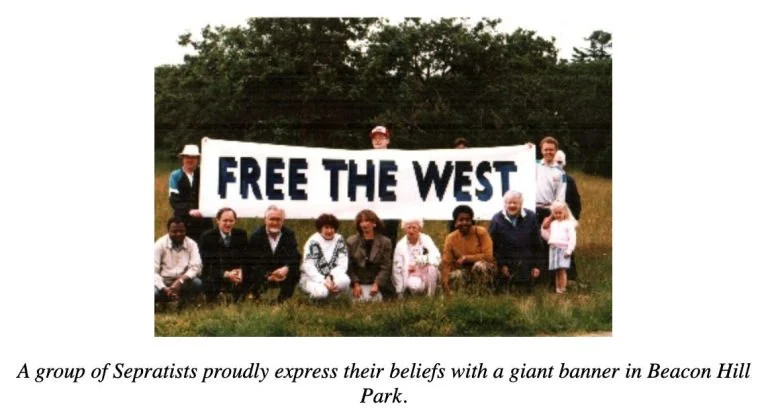
The roots of this movement go back at least to the 1970s. Lawyer Doug Christie stood out among those capable of giving clear articulation to the unjust exploitation by of Western Canada by a "pillaging federal government." Christie called for "unity" among the exploited population "who could become a powerful political force because the West is infinitely valuable and in fact essential to eastern affluence."
See this
Like many Global Research.ca readers, I got caught up in the engaging rise of the Truckers Freedom Convoy that emerged in large measure from an engaging version the freedom movement whose ground zero is, I believe, Alberta. The Truckers and their allies were able to challenge the misguided Covidian policies of the federal government in engaging ways that inspired upsurges of educated activism domestically and around the world.
The success of the Freedom Convoy set off a mean-spirited federal crackdown aimed most aggressively at Albertan targets. This kind of hardball treatment aimed at the ranks of dissident Albertans is clearly being absorbed into new rounds of hostility aimed at the real or imagined independence movement. The sides have already been drawn and perhaps the time is right to step back from the acrimony in order to gather intelligence, converse congenially, and strategize, ideally outside the framework of Alberta-Canada angst.
Rather than getting swept into an argument about, say, having a referendum about having another referendum, perhaps the best thing to do is to pull back, gain height and try to survey the larger picture of this unprecedented moment in human history.
As I am coming to see it the, the economic, political and military discourse about the place of Alberta, of Canada and of the First Nations in the Western Hemisphere and in global geopolitcs is ill-developed. This discourse is at nowhere near the level of sophistication and popular understanding we, in northern North America, require to make adequate assessments of the options, challenges and dangers swirling all around us
51st State
For most of the inhabitants of northern North America, the dominating presence of the United States of America creates a huge common denominator in the lives of many Canadians. Where US inhabitants are widely dispersed throughout their country, the vast majority of Canadians can drive to the northernmost parts of the USA in an hour or three, which a number of us readily do.
While many of us Canadians grew up within the orbit of US sports teams, celebrity culture, consumerism, Wall Street dollar dominance, as well as New York and Washington-based news reports, the arrival in the White House of Trump and his tariff fetishes is changing the map of many interactions.
President Trump's condescending tease about the probable destiny of Canada as the 51st US State, was especially influential in moving Canadian events along to where they are now. The comment was strategically crucial in creating the conditions for the Liberal Party of Canada to keep its political grip on the federal government with the Trudeau/Carney succession.
On the provincial side of Canadian federalism, the 51st state remark infused new energy into the Alberta independence movement. Professor Bruce Pardy, A Queen's University Law Prof., was quick off the mark to push the agenda that the Alberta independence movement should immediately seek to exploit Trump's remark in making the jump from what many see as the sinking ship of federalist Canada.
I find it significant that Pardy was a legal adviser and public educator working very publicly with the Freedom Convoy especially during the period of the parking protest in Ottawa.
Many in the independence movement are averse to the prospect of situating an independent Alberta inside the USA, certainly as a state or even as a territory of the United States like Guam, the Virgin Islands or Peurto Rico.
Now with the recent decision of the Justice Shaina Leonard along with the subsequent response of the federalist Premier Smith, it seems the time has come to use the intermission to takes stock of a number of contextual issues including the current role of the US government in governing Canada. A good starting point is the inclusion of the lands of Canada in the US Armed Forces' Unified Command Plan.
What is the Unified Command Plan?
Coming out of the Second World War the US government expanded its international functions into many new frontiers especially in military and financial affairs. On the military side, the US Armed Forces branched out to organize itself essentially as a form of global government with worldwide military bases, hundreds of which are still operating.
In a sense the empire governed from the expanding power base of the Pentagon after 1945 replaced the shrinking empire governed from the British Colonial Office in London. All the European Empires pulled back from the expense and demands of their imperial systems more or less concurrently with the dismantling of the British Empire.
Currently Canada is part of the the the US Northern Combatant Command (USNORTHCOM).
This military region includes the continental United States, Puerto Rica, Mexico, the Bahamas, the US Virgin Islands, the British Virgin Islands and apparently Greenland (Denmark), Bermuda, and the Turks and Caicos Islands. USNORTHCOM is one of 6 geographic zones into which the world is divided by the US Armed Forces.
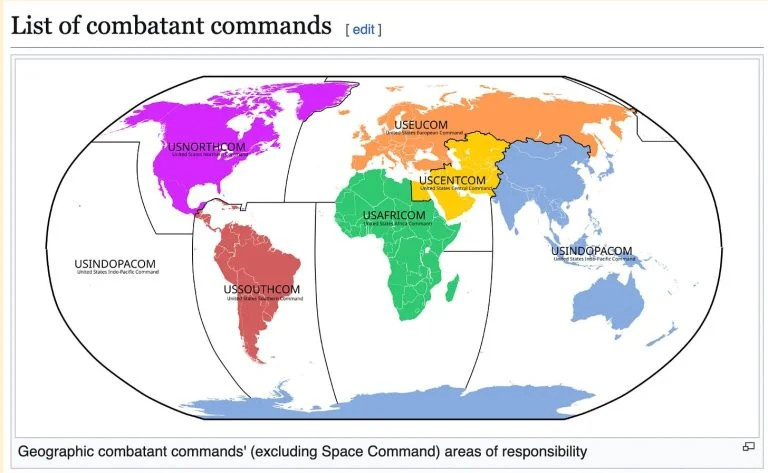
There are five other military commands that have military "jurisdiction" over outer space, cyberspace, special operations, and strategic command.
Because Canada is the northern neighbour of the United States and because Canada's northern neighbour is Russia, the invasiveness of the US military regime, while largely under the radar, is for the most far deeper than in other parts of the world. The US Central Combatant Command role in the Middle East has been much in the news lately. The Forward Headquarters of USCENTCOM has been situated at Al Udeid Air Base in Qatar. The role of Qatar has been as a primary host to the US Armed Forces. The Iranian Armed Forces have led to the bombing of the Ai Udeid Air base with Iranian missiles.
The Iranian hostility to all US military installations in the Middle East I think helps raise the issue of the status of hundreds of US military bases all over the world. No other country has such an elaborate system, a system which is very clearly implicated in the movement and sales of illicit drugs and probably human trafficking as well, including child trafficking. Might it be time to bring an end to such an audacious system of contemporary imperial activity, some of it no doubt criminal in nature?
Canada has played a significant role in the history of this transition from the imperial rule of Great Britain to the neoliberal rule of the US Empire with its privileged dollar currency. Canada was sometimes conceived as the third link in a North Atlantic Triangle. Canada was an intermediary in the genesis of the Anglo-American Empire whose most notorious imperial outgrowth is Israel.
This background provides a framework for some of the discourse of the Alberta independence movement. The British North America Act of 1867 created the Dominion of Canada as something of replica of the British Empire with the Ottawa-Montreal-Toronto region as an imperial metropolis and with Western Canada as its research-rich exploited colony.
There is much evidence that the structure of imperial rule from central Canada continues to this day in the inequitable apportionment of MPs, Supreme Court Judges, Senators, and transfer payments from Alberta to Ontario, Quebec and the Maritime provinces.
The attraction of Trump and US-based oil companies especially to Alberta is hardly surprising. These days reliable and secure access to energy sources is extremely valuable. Oil and gas and especially LNG continues to be strategically crucial as wealth and as strategic key to creating new wealth whether in chips, fertilizer, plastic, and transport. Oil and gas continue fuel the extension of the industrial revolution that began with coal and steam.
The Historical Context of Military Actions Within North America
A single issue has dominated military issues in norther North America ever since the United States of America emerged from a civil war among British North Americans. The secessionists who created the USA were much more numerous than the so-called United Empire Loyalists who headed north into the remaining Crown lands. Free land was one attraction but so too was a genuine conviction in some that theBritish imperial government would be more secure than an anticipated tyranny of the majority.
The Civil War resolved with a peace agreement in 1783 persisted. It eventually merged into the War of 1812. The defence of the British Empire in North America was embraced by a Confederacy of native Indians whose gifted leader was named Tecumseh. The Indian Confederacy helped protect Canada from annexation by a attacking the nascent US Army defeated at the US military post of Detroit.
The idea that the United States would eventually absorb Canada has persisted from the era of the founding of the United States. The United States moved West which the native Indians could not prevent try as some of them did including the Tecumseh Confederacy that did rally to prevent the US annexation of Canada
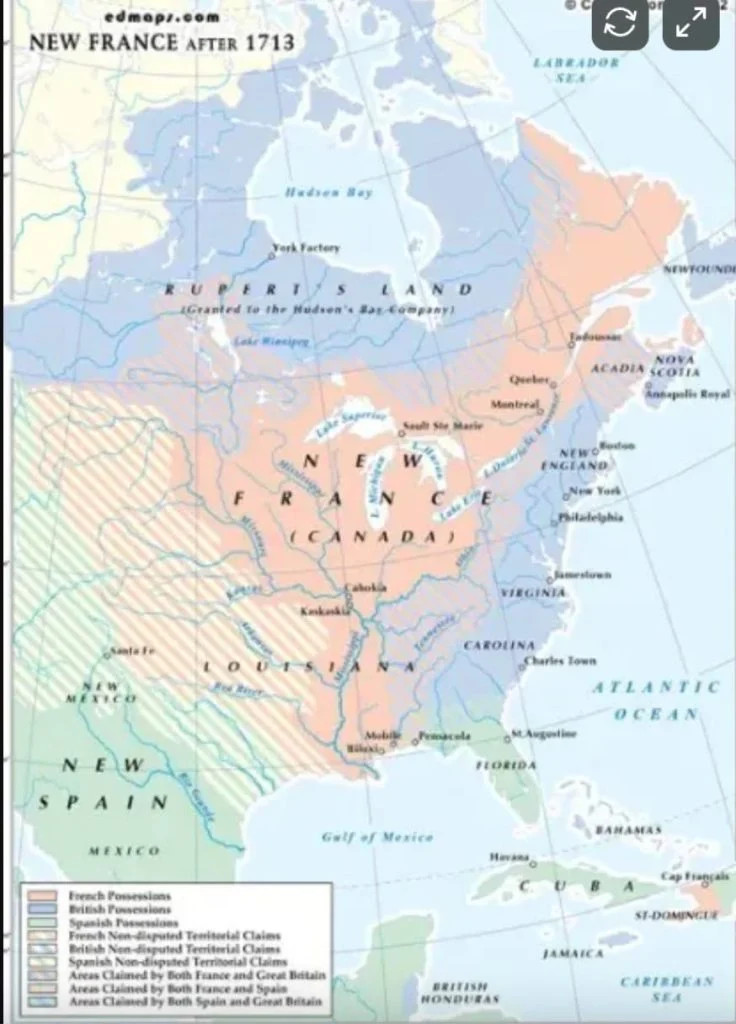
The westward expansion was by and large not accompanied by northward expansion because of the military strength retained by Great Britain. Before 1869, the British governed Canada in partnership with the Indians and the fur trading enterprises including the London-based Hudson's Bay Company and the Montreal-based North West Company.
While the inhabitants of Great Britain and the United States tended to look at themselves as cousins, as family, and as allies, those in charge of the military defence of Canada had to plan for the possibility that northern North America would be invaded by the USA.
To this day the most likely enemy of Canada is the United States.. The attitude of Donald Trump towards Canada is nothing new. It presents a contemporary manifestation of an old propensity to see Canada as a prize just ready for the taking.
The US Secretary of State, William Henry Seward, looked at Canada that way after Abe Lincoln's Union Army defeated the secessionist Confederacy in 1865. Seward tried and failed to get an annexation of Canada provision through the US Congress.
In 1866 Seward orchestrated the US purchase of Alaska from Russia with the expectation of having a US outpost at the extremes of Northwest North America. The expectation was that it would someday provide a platform for the US acquisition of Canada.
Michel Chossudovsky has explained the USA's War Plan Red. It was a plan to invade Canada and absorb it into the United States.
At the onset of the last three-quarters of the 21st century, along comes Trump with his instruction that Canada should more generously fund NATO. The perception that sooner or later Canada is going to be annexed by the USA, has to be taken seriously.
It has to be a factor to be considered in the development of a sovereign Canada, or of a sovereign Alberta, or of some sort of other territorial configuration that might take shape in some of North America or the of the Western Hemisphere. The Western Hemisphere is in its totality "America."
The original source of this article is Global Research.
Dr. Anthony Hall is currently Professor of Globalization Studies at the University of Lethbridge in Alberta Canada. He has been a teacher in the Canadian university system since 1982. Dr. Hall, has recently finished a big two-volume publishing project at McGill-Queen's University Press entitled "The Bowl with One Spoon".
-- © Prof. Anthony J. Hall, Global Research,